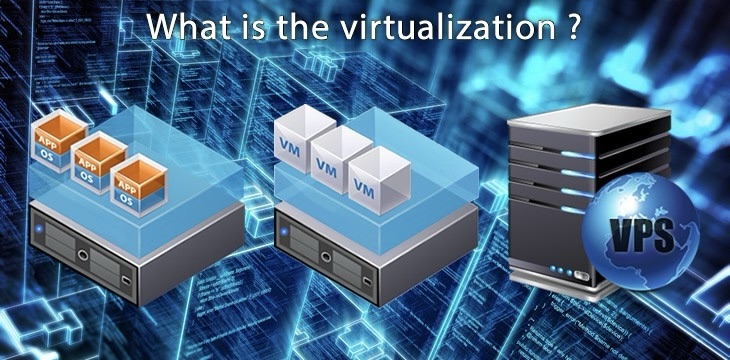
In the 21st century, software virtualization has evolved from a niche technology into a cornerstone of modern computing. From optimizing hardware utilization to enabling agility in development and deployment, virtualization has transformed industries. This blog delves into the history, key innovations, benefits, and future prospects of software virtualization, backed by references to credible sources.
What is Virtualization?
Virtualization refers to the process of creating virtual versions of computing resources—whether hardware, operating systems, storage, or networks. By decoupling these resources from their physical counterparts, virtualization enables flexibility, scalability, and efficient resource management.
In addition to traditional virtual machines (VMs), containerization—a more lightweight form of virtualization—has become prominent. Unlike VMs, which emulate an entire operating system, containers virtualize only the application and its dependencies, reducing overhead while increasing portability (Red Hat, 2023).
Furthermore, virtualization supports emerging technologies such as hybrid cloud environments and edge computing, where workloads need to move seamlessly across diverse infrastructures (VMware, 2023).
A Brief History of Virtualization
1. The Early Days: IBM Mainframes (1960s)
Virtualization began with IBM’s mainframes, where it was used to divide massive computing resources into smaller, manageable units. This allowed organizations to run multiple applications simultaneously, increasing productivity (Barak & La’adan, 2009).
2. Rise of Hypervisors (2000s)
The development of hypervisors, such as VMware’s ESX and Microsoft’s Hyper-V, marked a turning point. These platforms enabled the efficient sharing of physical resources among multiple virtual environments, bringing virtualization to enterprise data centers (VMware, 2023).
3. Containerization (2010s)
The introduction of Docker in 2013 revolutionized virtualization by allowing developers to package applications and their dependencies in isolated containers. This innovation reduced conflicts and improved scalability for cloud-native applications (TechCrunch, 2023).
4. Virtualization in Cloud Computing
Platforms like AWS and Microsoft Azure heavily utilize virtualization to deliver scalable infrastructure-as-a-service (IaaS). By abstracting physical resources, they provide users with flexible and cost-effective computing environments (Gartner Research, 2024).
5. Virtualization for Edge Computing
As edge computing gained momentum, virtualization technologies adapted to deploy lightweight instances closer to users, improving latency and performance in applications such as IoT and autonomous vehicles (Red Hat, 2023).
Key Benefits of Virtualization
1. Resource Efficiency
Virtualization significantly reduces hardware costs by allowing multiple virtual environments to operate on a single physical machine. This not only lowers initial investment but also decreases power consumption and cooling requirements (Barak & La’adan, 2009).
2. Scalability and Flexibility
Virtual environments can be scaled up or down depending on demand. This elasticity is particularly critical in industries with fluctuating workloads, such as e-commerce during peak seasons (VMware, 2023).
3. Improved Disaster Recovery
Virtual machines and containers are easier to back up and replicate than physical servers. Solutions like live migration allow businesses to recover quickly from hardware failures, ensuring high availability (Red Hat, 2023).
4. Reduced Hardware Dependency
Virtualization enables organizations to run legacy applications on modern hardware by emulating outdated environments, extending the lifespan of critical software systems (TechCrunch, 2023).
5. Enhanced Security
By isolating virtual environments, virtualization limits the impact of security breaches. For example, a compromised container cannot directly affect the host system, making it an effective safeguard against cyberattacks (Gartner Research, 2024).
6. Accelerated Development and Testing
Developers can spin up isolated environments for testing without interfering with production systems. This accelerates innovation cycles and allows for experimentation with minimal risk (Red Hat, 2023).
Notable Technologies Driving Virtualization
1. Hypervisors
Hypervisors like VMware ESXi, KVM, and Microsoft Hyper-V serve as the foundation of virtualization by enabling multiple operating systems to share a single physical host (VMware, 2023).
2. Containers
Containers, popularized by Docker and orchestrated by Kubernetes, have transformed how developers deploy applications. They provide lightweight isolation and simplify moving applications across environments (TechCrunch, 2023).
3. Cloud Computing
Public cloud platforms such as AWS, Microsoft Azure, and Google Cloud depend heavily on virtualization to deliver scalable, on-demand infrastructure and services (Gartner Research, 2024).
4. Software-Defined Infrastructure (SDI)
Virtualization extends beyond compute resources to networks and storage through SDI, enabling programmatic control and automation of the entire data center (Red Hat, 2023).
5. GPU Virtualization
With the rise of AI and machine learning, GPU virtualization technologies like NVIDIA vGPU allow multiple virtual environments to share high-performance graphics hardware, optimizing costs and performance (TechCrunch, 2023).
6. Serverless Computing
Though not virtualization in the traditional sense, serverless platforms leverage virtualization principles to abstract infrastructure management, enabling developers to focus solely on application logic (Gartner Research, 2024).
Conclusion
Virtualization is more than just a technology—it’s a paradigm shift enabling flexibility, scalability, and innovation. By embracing virtualization, organizations can stay ahead in an increasingly digital and dynamic world. From its roots in mainframes to its role in modern cloud and edge computing, virtualization will continue to redefine the boundaries of what is possible in computing.
References
1. Barak, A., & La’adan, O. (2009). The Virtualization of Operating Systems. ACM Transactions on Computer Systems. Available at: ACM Digital Library
2. VMware. (2023). The Role of Virtualization in Cloud Computing. Available at: VMware
3. Red Hat. (2023). What is Virtualization?. Available at: Red Hat
4. TechCrunch. (2023). Docker and Kubernetes Revolutionize Virtualization. Available at: TechCrunch
5. Gartner Research. (2024). Future Trends in Virtualization and Cloud Computing. Available at: Gartner
 The Technology Place